This was created in response to the key emerging themes from a series of interviews we had gathered earlier in the year with practitioners in a range of roles across the culture, education, university, domestic abuse specialist support and wider voluntary sectors.
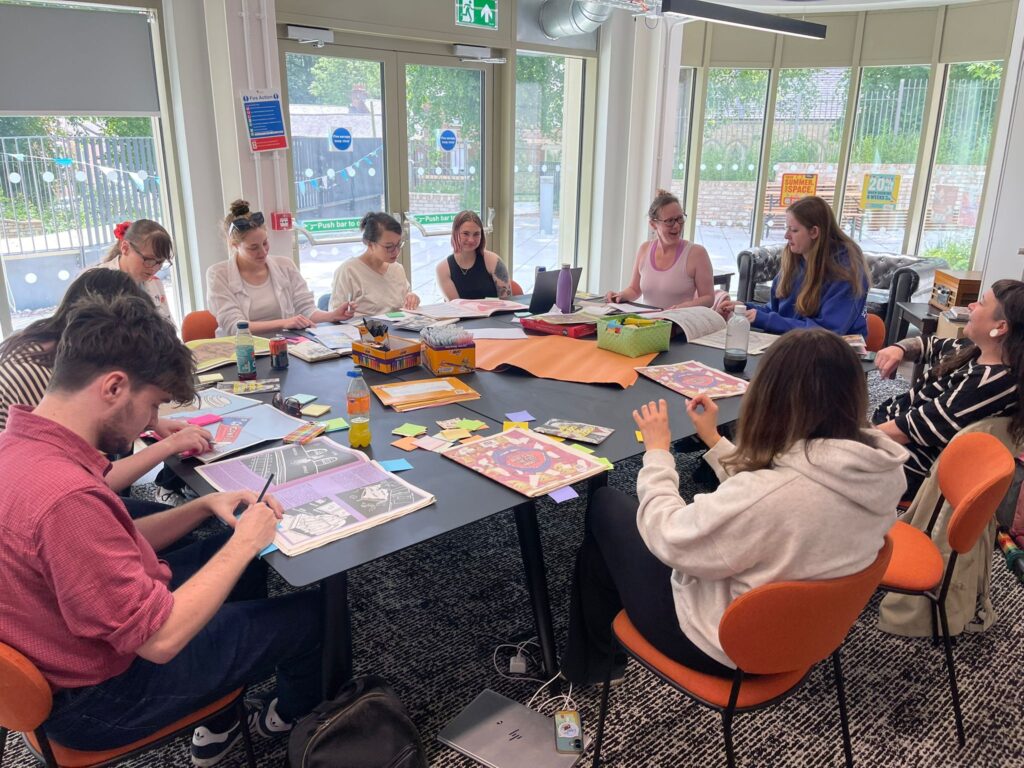
This was a really lovely session exploring the aspect of emotional load in our work – although we generally concluded we could have done with a full day to really get into it!!
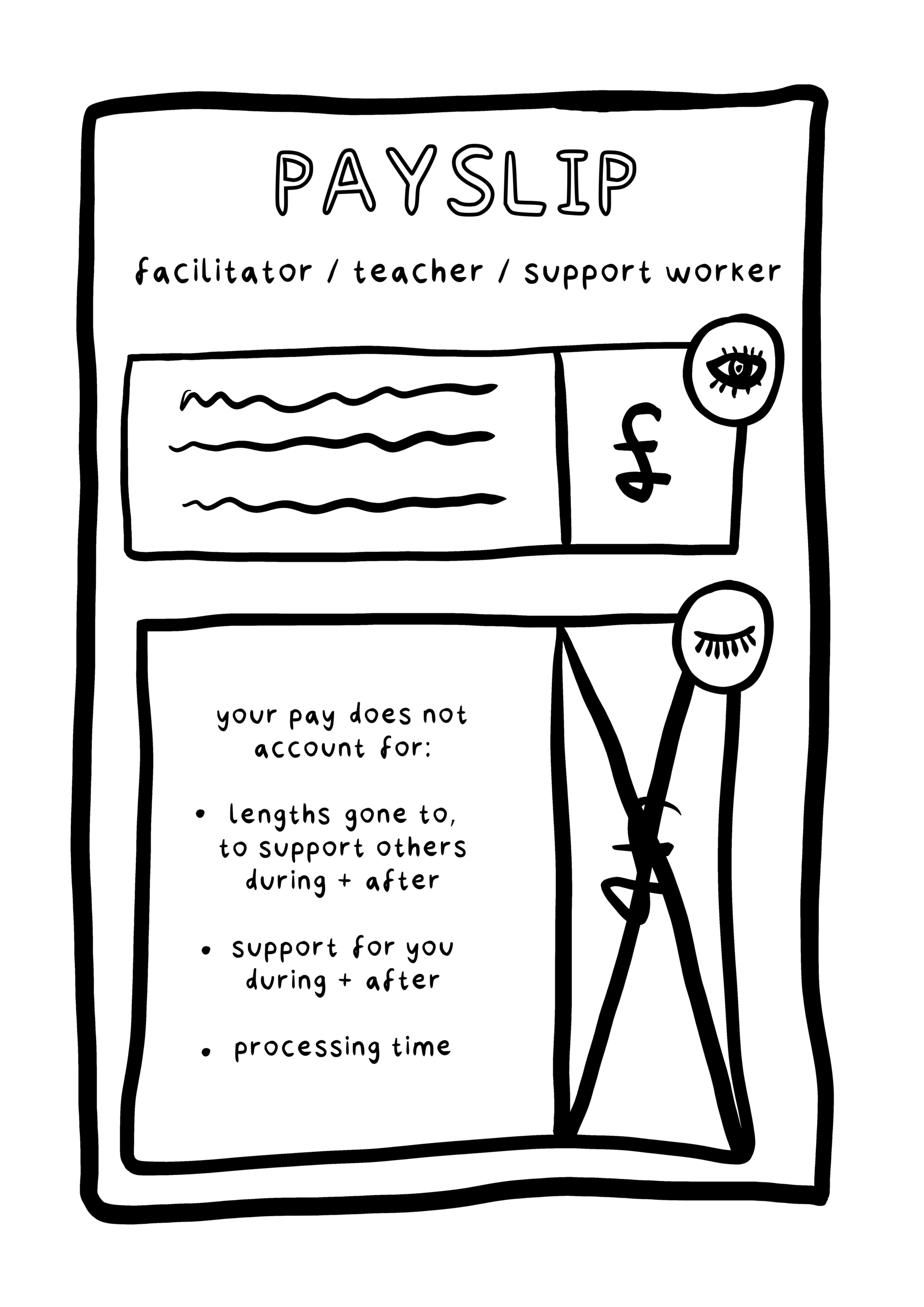
One of the overriding themes from the interviews we conducted was the sense that there’s a huge tranche of the work that we do in the sectors noted above that is invisible – hence the poignant “payslip” artwork created by the wonderful Lou Brown.
In the course of our work, we speak to so many people who are exhausted, on the edge of burnout. These are people who deeply care. Whose roles involve supporting others. Engaging on a human level to provide support, to encourage learning around tricky topics, to create a space for others to emote.
It feels so important to create a space for the people doing this invaluable work – work that underpins the fabric of society – to be able to acknowledge this aspect of their work, that it carries an emotional weight, that it is unsurprising that we will feel the impact of that, that this does not make us weak.
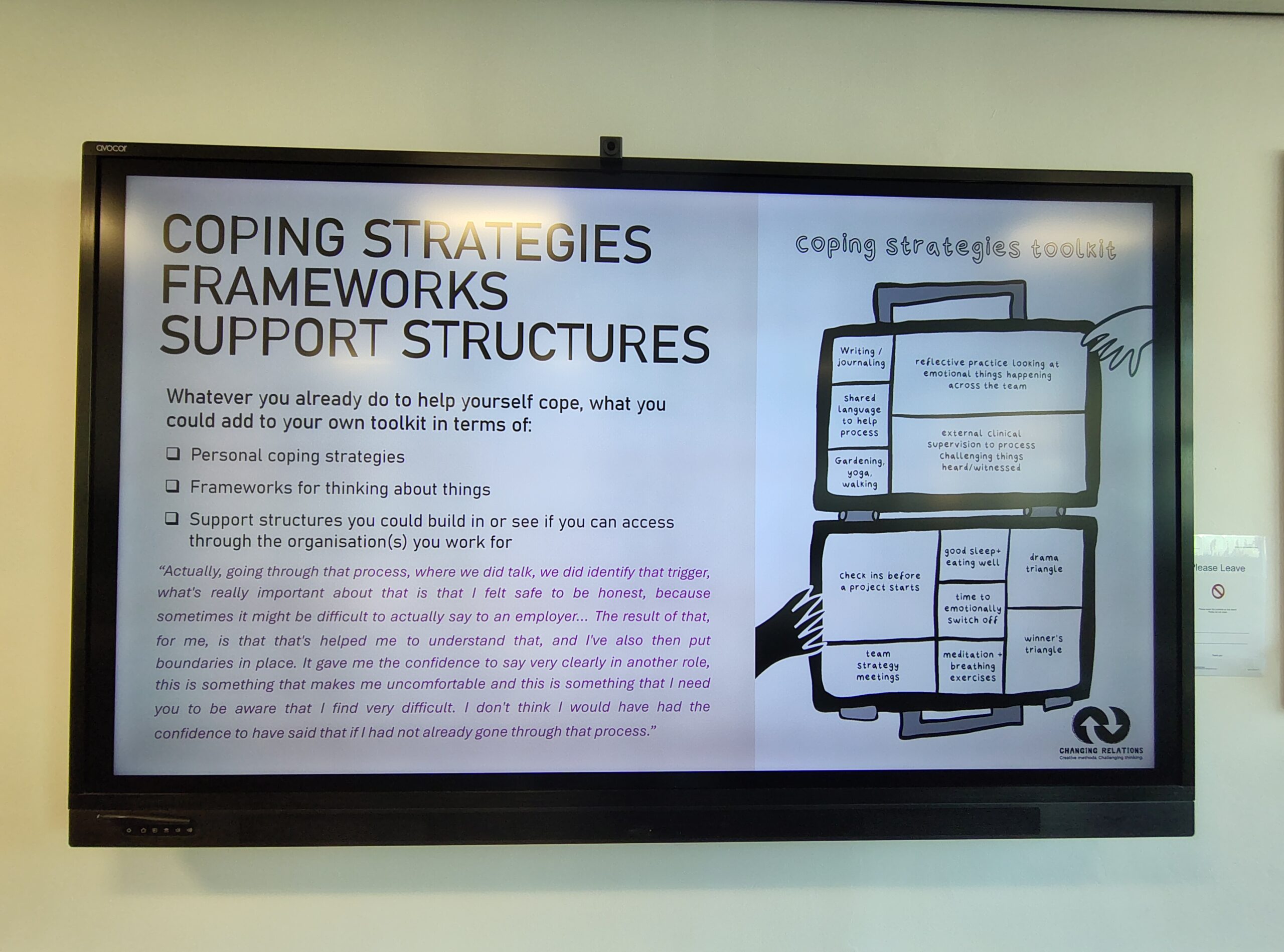
Lou also created this fab “toolkit” artwork that pulls out the breadth of personal coping strategies our interviewees use, but also the frameworks for helping them to think about this kind of work and the support strategies that practitioners need in place to be able to keep on keeping on.
It felt really valuable for practitioners from a range of sectors to come together and share perspectives and tools.
Some of the comments from our lovely participants:
🎤 “Was good to acknowledge different ways of working.”
🎤”I found useful the toolkit of coping strategies and that’s my take away.”
🎤 “I think this is an incredibly helpful project and process. Very much needed.”
We’re really keen for this work to benefit as many practitioners in roles that involve supporting others as possible. So if it sounds interesting, please us a shout.
Thanks to Durham University EDI Fund for the support that made this possible.