

Director’s Blog – Lisa Charlotte Davis
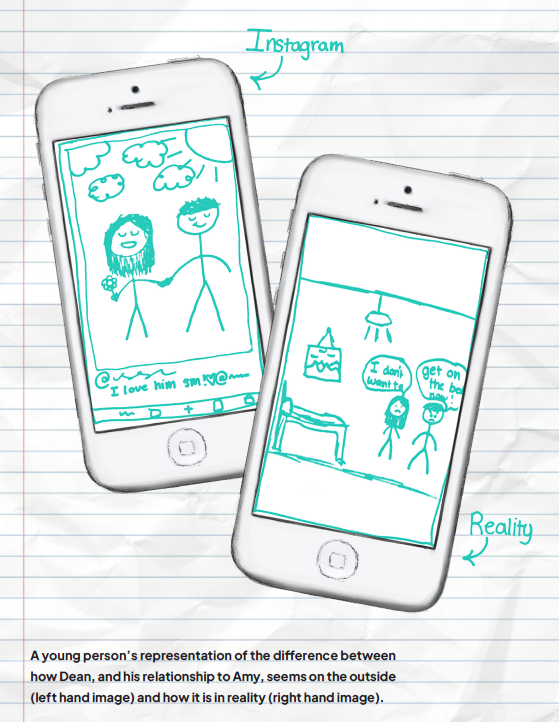
The extract below is an example of someone controlling their partner’s access to social media –
“She wouldn’t like me talking to different people on Facebook, for example. She’d be very paranoid about that, so I wouldn’t talk to people about how things were going.”
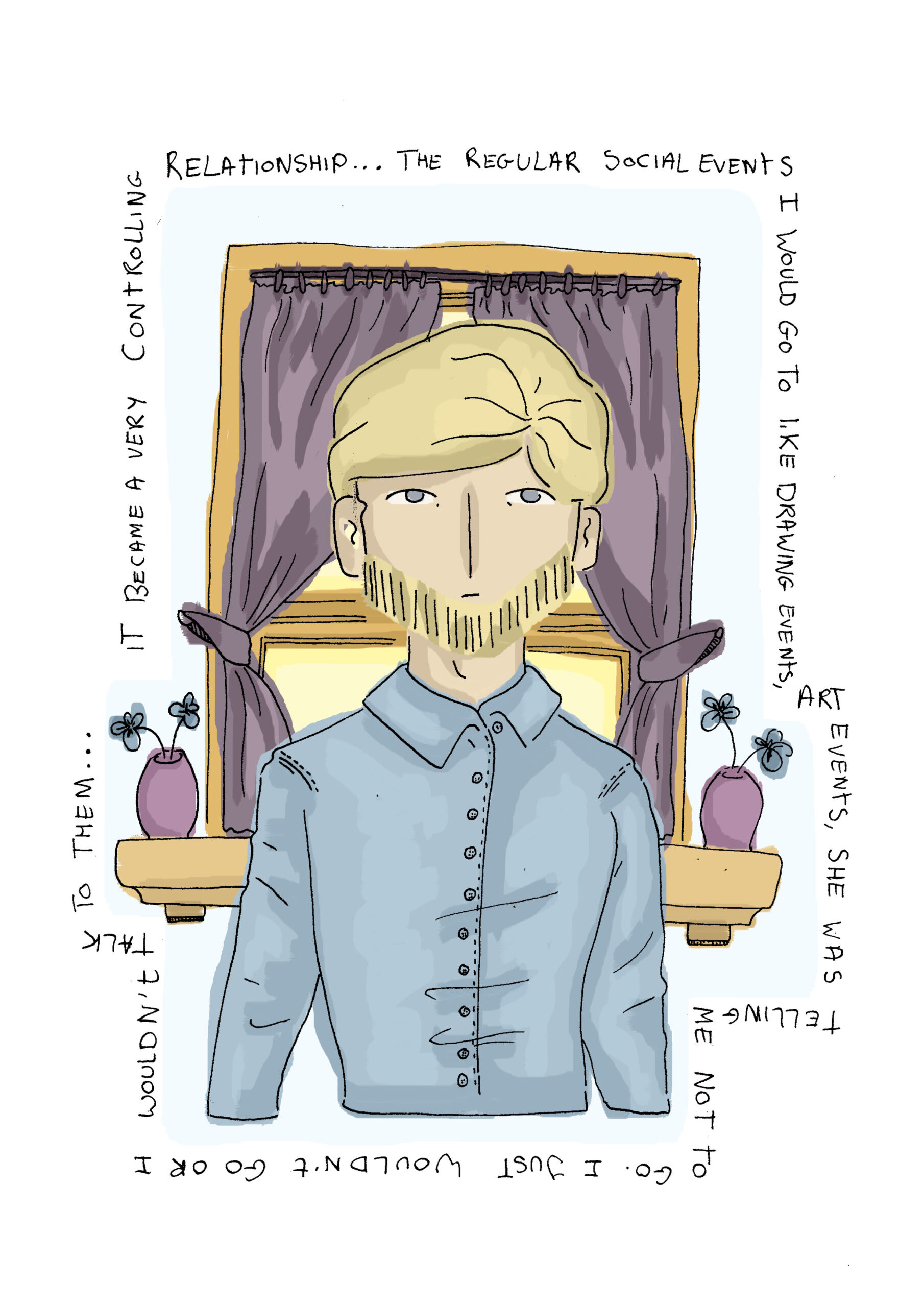
As indicated by the images created to represent this case, this is an extension of the physical isolation an abusive partner may create, reducing the victim’s access to friends, connections who might support them, increasing their reliance on the abuser as the main point of influence.
It may seem out of place to select an image of a male domestic abuse survivor as a 16 days post when the focus of the 16 days is gender-based violence.
Absolutely women are disproportionately affected by domestic abuse.
But what is interesting about this male survivor is the way in which his experience is clearly gendered, in the sense that the abusive relationship dynamic is influenced by traditional gender stereotypes –
“There was this mentality there when she was aggressive or even when she was adversarial where, because I’m quite sensitive, she would think I was gay, or think I was very feminine and she didn’t like that.”
This leaves us with a couple of take aways:
1. A change in someone’s access to – and communication on – the social media platforms they usually use could be a sign they are experiencing digital abuse.
2. When we think about the White Ribbon call to Speak Up, it’s worth acknowledging that banter based on gender stereotypes has the potential to reinforce harmful attitudes that can negatively impact men as well as women.
Design by Lizzie Lovejoy