

Director’s Blog – Lisa Charlotte Davis
Dr Warren Larkin was invited by the Academy for Social Justice to report on his Youth Endowment Fund funded research into trauma-informed practice in secondary schools.
Did you know that:
💔 1/3 young people are exposed to potentially traumatic events by the age of 18
💔1/10 young people will have had 4 or more adverse childhood experiences by the age of 18
💔 The amount of adversity a young person experiences correlates to reduced engagement with education, higher levels of absence from school and a greater likelihood of exclusion
On the flip side, of the positive childhood experiences that are protective factors mitigating against the transmutation of traumatic events into lifelong mental health challenge, a number of these can be generated within a school environment:
💞 experiencing a sense of belonging in school or their wider community
💞 at least 2 non-parent adults taking an interest in them
💞 feeling supported by friends
Alongside Warren’s presentation of his programme delivery and the key learning outcomes that emerged, we got to hear from one of the school leaders involved in the programme who had really embraced the emphasis on therapeutic skills, reflective practice and protecting the wellbeing and emotional regulation of school staff in the recognition that this will support students to be better regulated.
Some key takeaways for me:
💡Teachers don’t always realise the crucial role they play as a safe adult to a child. People can assume that, if they’re not a counsellor, they are not technically playing a mental health role. But as we saw from the protective factors above, showing an interest is important. Listening is important. This is very not nothing when it comes to wellbeing.
💡Some teachers are worried that the idea of taking on a trauma-informed approach means we’re diluting discipline and accountability for problematic behaviour. But if discipline takes places in the absence of a safe trusting relationship, a young person is less likely to take the message on board, whereas the converse is also true, meaning that a trauma-informed approach is more, not less, likely to enhance behaviour management.
💡So many teachers are so strongly in survival mode given the current workload in schools that it is really really challenging for them to have the head space to take on board something new.
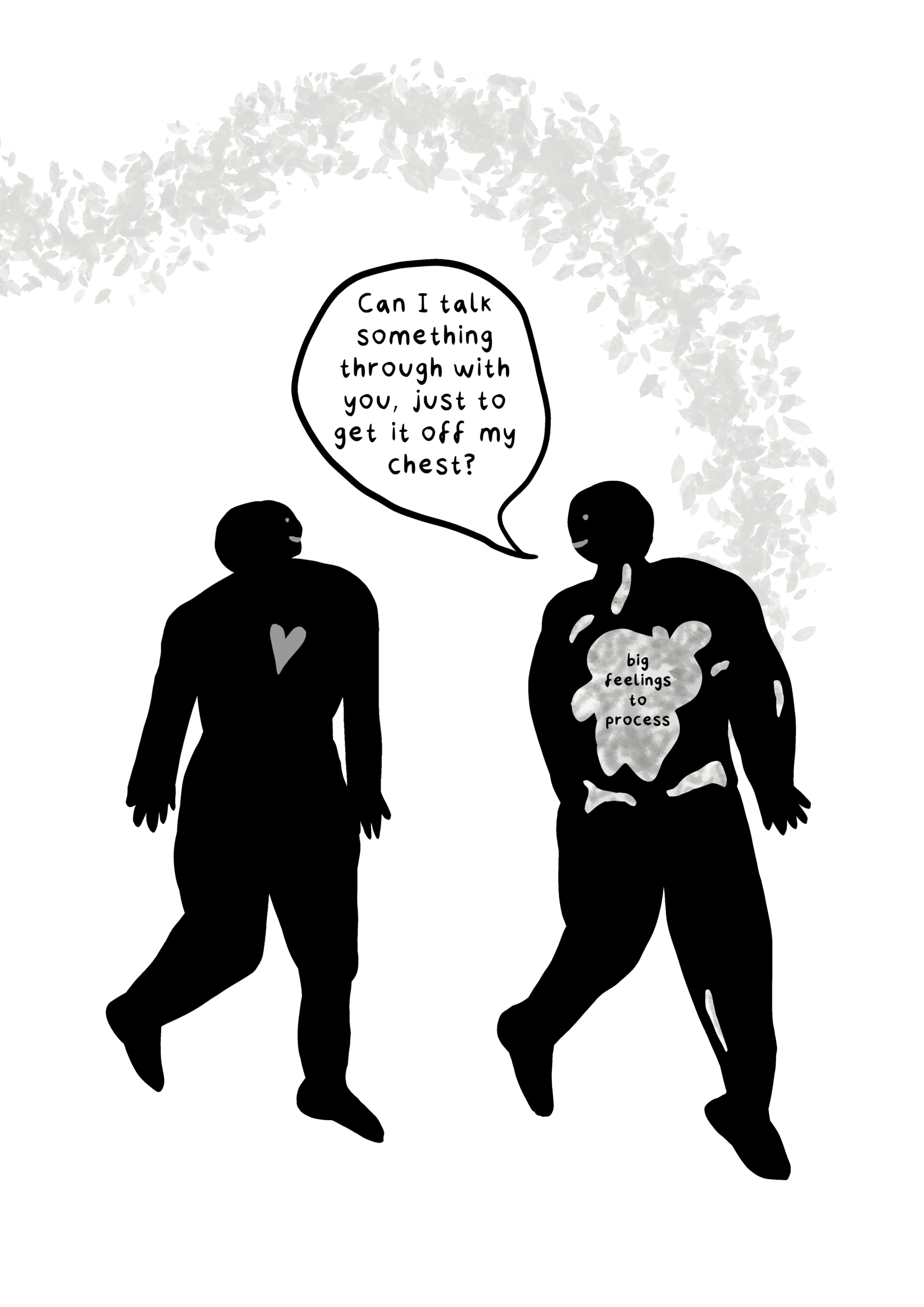
I wanted to share one of the images from our Navigating Vulnerability project (artist credit Lou Brown) because it felt really aligned to the notion that we need to make sure we are looking after the people who are looking after others. Teachers play a huge role in developing the future adult population of our society. If a child’s emotional health is the strongest predictor of a satisfying adult life (research credit Richard Layard), we need an education system that is better at looking after our teachers.
Take a look at the More Good Days at School report.